Amber Young
Anxiety, OCD, and Trauma Specialist in Connecticut & Maryland
Therapy isn't about becoming someone else. It's about making room for who you are.
In-person counseling in Ridgefield, CT
Telehealth across Connecticut
Insight is important. But so is knowing what to do with it.
You can read all the self-help books, follow the therapists on Instagram, and become remarkably good at understanding why you do the things you do. And still find yourself stuck in the same patterns.
That's because understanding something and knowing how to change it aren't always the same thing.
As a therapist specializing in ADHD, anxiety, OCD, and trauma, I help people connect the dots between what they're experiencing, why certain patterns keep showing up, and what they can actually do about them.
I believe good therapy should give you more than insight. It should give you the tools, perspective, and confidence to start doing things differently—without feeling like you have to become a completely different person in the process.

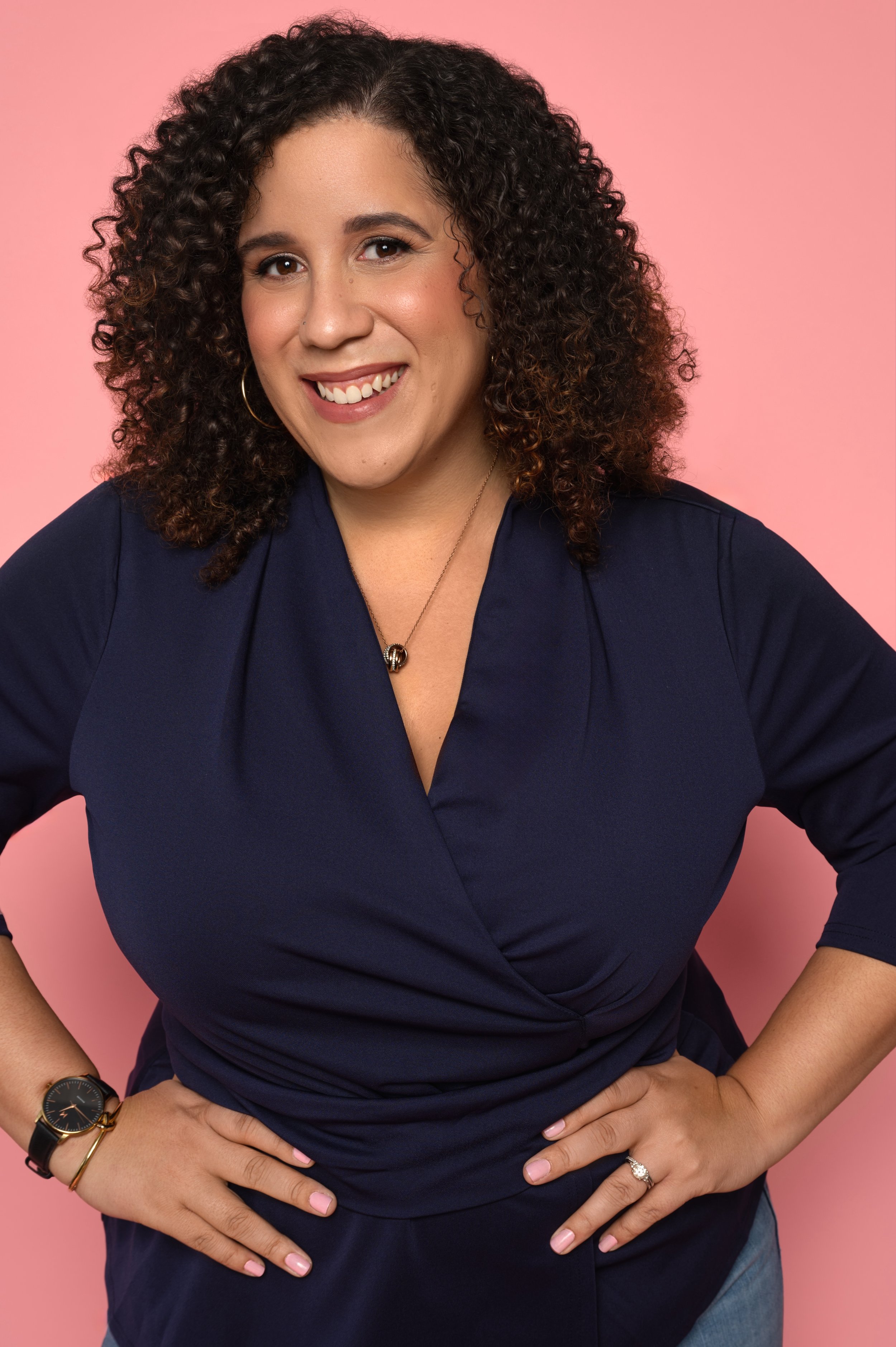
Meet Amber!
I sometimes joke that my job is my hobby, but there's a little truth to it. I genuinely love what I do. One of my earliest (and most persistent) hyperfixations has been figuring out how people work: why we do what we do, how our brains make sense of the world, and why we sometimes get stuck in patterns even when we know they're not helping us.
I also believe that therapy works best when you feel comfortable enough to show up as yourself. It's a little victory for me when someone reaches for a fidget without asking, curls up with a blanket, or grabs a snack on their way into session. Those small moments tell me that this space is starting to feel like theirs, too.
I take the clinical work seriously, but I don't believe every moment of therapy needs to feel serious. There's room for humor, curiosity, and the occasional very human moment. We can talk about difficult things, challenge longstanding patterns, and still find opportunities to laugh along the way.
My hope is that you leave our sessions with more than a better understanding of yourself. I want you to have something you can actually use between appointments, whether that's a new perspective, a skill to practice, or a different way of responding when life gets complicated.
Your brain is trying to help. Sometimes it's just working with outdated instructions.
Our brains are remarkably good at learning how to protect us. They're not always as good at recognizing when those old strategies are no longer helpful. They're constantly learning, adapting, and finding ways to protect us. Sometimes those adaptations are incredibly helpful. Other times, we find ourselves relying on patterns that made sense once but aren't doing us any favors anymore.
One of my favorite parts of therapy is helping people connect those dots. Maybe what looks like procrastination is actually overwhelm. Maybe the need to have everything figured out is an attempt to feel safe. Or maybe something you've spent years criticizing yourself for is a coping strategy that deserves a little more understanding.
My approach is rooted in cognitive behavioral therapy (CBT), but I don't believe any single treatment model has all the answers. I draw from exposure and response prevention (ERP), inference-based CBT (I-CBT), acceptance and commitment therapy (ACT), and Internal Family Systems (IFS) concepts, depending on what we're working through together.
Sometimes our work is about learning new skills. Sometimes it's about challenging old beliefs, understanding the role of your nervous system, or practicing something that feels uncomfortable. What we focus on depends on what you're experiencing, what matters to you, and what will actually be useful in your life.
-
I'm a firm believer that being a good therapist means continuing to be a student. My professional development includes ongoing training in OCD, trauma, evidence-based psychotherapy, and clinical assessment.
The following is a selection of conferences and advanced trainings I've attended, rather than an exhaustive list.
OCD & Anxiety
International OCD Foundation (IOCDF) Annual Conference — 2026, 2023
Treating Clients with Obsessive-Compulsive Disorder: Improve Psychological Flexibility through Acceptance and Commitment Therapy & Exposure and Ritual Prevention — 2023
Mastering Telehealth and Anxiety — 2020
Trauma & Internal Family Systems
Oxford Master's Trauma Conference — 2025, 2024
Richard Schwartz's IFS Therapy Master Class — 2023
Advanced Trauma Treatment for Children and Adolescents — 2020
Evidence-Based Treatment & Clinical Assessment
Essential Acceptance & Commitment Therapy Core Components — 2021
Mastering DSM-5 Differential Diagnosis — 2020
Advanced Treatment of Depression & Mood Disorders — 2020
LGBTQ Clients: Clinical Issues and Treatment Strategies — 2019
Additional Professional Conferences
Renfrew Conference — 2023
-
Lewis & Clark College | 2023
Coursework toward a Certificate in Disordered EatingThe Catholic University of America | 2018
Master of Arts (M.A.) in PsychologyJohns Hopkins University | 2014
Master of Science (M.S.) in CounselingFordham University | 2013
Bachelor of Science (B.S.) in PsychologyFordham University BS Psychology 2013
-
Connecticut
Licensed Professional Counselor (LPC)
License #46.005261
Verify Connecticut LicenseMaryland
Licensed Clinical Professional Counselor (LCPC)
License #LC11545
Verify Maryland LicenseColorado
Licensed Professional Counselor (LPC)
License #24381
Verify Colorado License -
Outside of Session
When I'm not working, life is usually pretty full. I have two dogs, Atticus and Harper, and two cats, Edna and Donnie (also known as DonFloyd or Donnie Cat, depending on the day). I also have a young son who I am perpetually in awe of and completely adore.
I'm an avid true-crime podcast and documentary enthusiast, love to bake, and get disproportionately excited about my birthday. I enjoy walks and strength training, although I don't make nearly enough time for either. I also love scary movies, but will only watch them with my partner. Apparently, I have limits.
I also know firsthand that life doesn't always cooperate with our plans. Living with anxiety, ADHD, and an autoimmune condition has challenged me in ways I never anticipated. Those experiences have deepened my compassion, challenged some of my own coping habits, and influenced how I approach my clinical work. They remind me that knowing what might help and having the capacity to do it aren't always the same thing.
Therapy sessions are meant to focus on you, but I think it helps to know that your therapist is a person, too.
Specialties
Trauma
Anxiety
OCD
ADHD
As Featured in:


Therapy Office